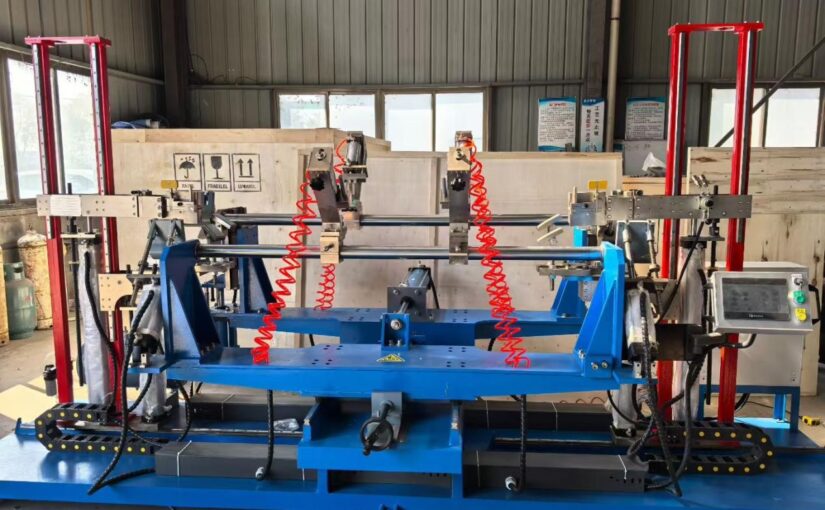
High voltage motors are among the most important electrical machines used in industries where large amounts of power must be delivered reliably and efficiently. They are found in power generation, oil and gas, mining, water treatment, steel production, chemical processing, manufacturing plants and many other heavy-duty applications. Behind every reliable high voltage motor is a carefully controlled manufacturing process that combines electrical engineering, precision machining, insulation technology, mechanical assembly and extensive testing. Understanding how a high voltage motors making machine works provides useful insight into how manufacturers achieve the strength, accuracy and reliability required for demanding industrial environments.
The production of a high voltage motor is considerably more complex than assembling a conventional low-voltage electric motor. High operating voltages place greater demands on insulation, winding systems, mechanical components and quality control. Even small manufacturing imperfections can affect efficiency, operating temperature, vibration levels or long-term electrical performance. For this reason, modern motor manufacturing relies on specialised equipment and carefully designed production stages rather than a single machine performing the entire process.
Understanding High Voltage Motor Manufacturing
A high voltage motor normally consists of several major components, including the stator, rotor, windings, core, shaft, bearings, housing and insulation system. Each component must be manufactured to precise specifications before the motor can be assembled and tested. The manufacturing process begins with engineering and material selection, followed by core production, winding preparation, insulation, mechanical machining, assembly and final testing.
One of the most important parts of the manufacturing process is the stator core. It is generally built from thin electrical steel laminations that are shaped and stacked to form the magnetic circuit. Manufacturing machines are used to cut, form and accurately position these laminations. The purpose of using laminated steel is to reduce electrical losses caused by eddy currents. Accurate stacking is essential because uneven or incorrectly positioned laminations can influence magnetic performance, noise and heat generation.
The stator winding is another critical area. High voltage motors require sophisticated insulation systems because the windings operate under significantly greater electrical stress than ordinary motors. Specialised winding machines help place copper conductors into the stator slots according to the motor design. The conductors may then receive insulation, binding and other treatments designed to protect them from electrical, thermal and mechanical stress.
A modern high voltage motors making machine may therefore refer to specialised equipment used at different points of this manufacturing process rather than one universal machine. Depending on the production facility, the machinery may include coil winding equipment, slot insulation machines, conductor forming systems, core stacking equipment, rotor balancing machines, CNC machining centres and electrical testing systems.
Precision in Winding and Insulation
Winding technology has a direct effect on the performance and service life of a high voltage motor. The copper conductors must be positioned correctly and secured so they can withstand electromagnetic forces during operation. Manufacturing equipment needs to maintain consistent tension and positioning while avoiding damage to conductor insulation.
Insulation is particularly important in high voltage applications. A suitable insulation system must withstand electrical stress, heat, vibration and environmental conditions for many years. Depending on the motor design, manufacturers may use mica-based insulation, resin systems, glass materials and other specialised components. The insulation process can involve wrapping, pressing, resin application, curing and inspection.
Modern production lines often use controlled heating and curing systems to ensure insulation materials achieve the required physical and electrical characteristics. Consistency is important because variations in curing or resin penetration can create weak points that may become serious problems after the motor enters service.
Key Machines Used in High Voltage Motor Production
A high voltage motor manufacturing facility normally uses a combination of automated, semi-automated and conventional equipment. The exact machinery depends on motor size, production volume, design requirements and the level of automation required.
Winding machines are among the most important pieces of equipment. They form and position copper coils with a high degree of repeatability. For large industrial motors, winding systems must handle substantial conductor dimensions while maintaining accurate geometry. Automation can reduce variation between individual motors and improve production efficiency.
Core stacking equipment is also essential. The stator and rotor cores contain large numbers of steel laminations, and these must be aligned accurately during assembly. Specialised stacking machinery can help maintain consistent pressure, positioning and alignment. Good core construction contributes to efficient magnetic performance and helps control vibration and operating temperature.
For rotor manufacturing, precision machining equipment is particularly important. Shafts and other rotating components need to meet tight dimensional requirements because even small inaccuracies can cause imbalance. CNC machines may be used to produce shafts, mounting surfaces and other components to the specified tolerances. After machining, dynamic balancing equipment checks whether the rotating assembly is properly balanced.
Balancing is a critical step for large high voltage motors because the rotor may operate at high speed for long periods. An imbalanced rotor can create excessive vibration, accelerate bearing wear and place additional stress on the motor structure. Modern balancing machines measure the rotating assembly and identify where correction is required.
Pressing and assembly machines also have an important role. Large motor components can be heavy and difficult to position manually. Hydraulic or specialised mechanical systems may be used to fit components together while controlling pressure and alignment. Accurate assembly reduces the risk of mechanical problems during operation.
Testing and Quality Control
Manufacturing a high voltage motor does not end when the components have been assembled. Testing is essential for confirming that the finished machine meets its electrical, mechanical and performance requirements.
Electrical testing can include insulation resistance measurements, winding resistance checks and high-voltage withstand tests. Depending on the motor and applicable standards, manufacturers may also carry out surge testing, partial discharge measurements and other diagnostic procedures. These tests help identify weaknesses in the insulation system before the motor reaches the customer.
Mechanical testing is equally important. Bearings, shafts, couplings and housings must operate correctly under expected loads. Vibration measurements can reveal imbalance, misalignment or other mechanical problems. Temperature and performance tests may also be performed to confirm that the motor operates within its designed limits.
Quality control should continue throughout production rather than being limited to the final inspection. Materials need to be checked when they arrive, manufacturing dimensions should be monitored during production, and electrical characteristics should be verified at appropriate stages. This approach makes it easier to identify problems early and maintain consistent quality.
Modern factories increasingly combine measurement systems with digital production records. Sensors and monitoring equipment can collect information about temperature, pressure, winding processes and machine performance. This data can help manufacturers identify production trends, improve maintenance and reduce the possibility of unexpected equipment failures.
Choosing the Right Manufacturing Equipment
Selecting the right high voltage motors making machine depends on several factors. Motor size is one of the first considerations because large industrial motors require machinery capable of handling heavy components and substantial copper conductors. Production volume is another important factor. A factory producing a small number of customised motors may prefer flexible equipment, while a high-volume manufacturer may benefit from greater automation.
Accuracy, reliability and service support are also important. Manufacturing equipment must maintain consistent performance over long production periods. Downtime can be expensive, particularly when a production line depends on specialised machinery that is difficult to replace or repair quickly.
Manufacturers should also consider the compatibility of equipment with their existing production systems. Machines that can integrate with digital monitoring, automated inspection and production management systems can provide greater visibility and efficiency. Operator safety should remain a priority as well, particularly when machinery handles high forces, heavy components or high-temperature processes.
The best equipment is not necessarily the most automated or expensive option. The right choice is the machine that matches the manufacturer’s production requirements, motor designs, quality standards and long-term business objectives.
The Future of High Voltage Motor Manufacturing
The manufacturing industry is moving towards greater automation, digital monitoring and data-driven quality control. High voltage motor production is expected to follow the same direction. Intelligent machines can monitor manufacturing conditions in real time, identify deviations and provide information that helps operators make faster decisions.
Automation can also improve repeatability. Processes such as winding, balancing, measurement and inspection can be performed with greater consistency when properly configured automated systems are used. At the same time, skilled engineers and technicians remain essential because motor manufacturing involves complex design decisions, maintenance requirements and quality assessments that cannot always be handled by machines alone.
Energy efficiency is another major focus. Industries are increasingly looking for motors that deliver high performance while reducing energy consumption and operating costs. Better materials, improved winding techniques, more accurate manufacturing and advanced testing can all contribute to more efficient motors.
Ultimately, high voltage motor manufacturing is a combination of engineering precision, specialised machinery and rigorous quality control. A well-designed high voltage motors making machine can improve production accuracy, reduce manufacturing variation and support the creation of motors capable of operating reliably in demanding industrial conditions. As industrial systems become more sophisticated, manufacturers that invest in precise equipment, skilled personnel and robust testing processes will be better positioned to produce dependable high voltage motors for the next generation of heavy-duty applications.